
Why Invoices Cost More Than You Think
Every restaurateur knows food costs are their biggest variable expense. But there's a hidden cost that rarely shows up on the P&L: the time and errors involved in processing supplier invoices.
Here are five ways manual invoice management is costing your restaurant money right now.
1. Paying for Invoices You Can't Find
When invoices arrive by email, post, and WhatsApp from 50+ suppliers, things slip through the cracks. Late payment fees accumulate quickly, and missed invoices can damage supplier relationships at exactly the wrong time — just before a big weekend rush.
The fix: A centralised inbox where every invoice is captured automatically, regardless of how it arrives.
2. Coding Errors That Distort Your Numbers
When someone manually types "tomatoes" into your accounts as "produce" one month and "vegetables" the next, your cost reports become meaningless. You can't spot trends, and you certainly can't use the data to cut costs or negotiate better terms.
The fix: Consistent, automatic coding using machine learning trained on your specific chart of accounts.
3. VAT You Can't Reclaim
Swedish restaurants can reclaim input VAT on many supplier purchases. But when invoices aren't processed correctly or VAT codes are assigned wrong, money gets left on the table every month — sometimes thousands of kronor.
The fix: Automated VAT identification and correct coding on every line item, every time.
4. Month-End Chaos
Manual invoice processing creates a predictable bottleneck at month-end. Your accountant is chasing documents, you're digging through email folders, and getting an accurate P&L takes days. Meanwhile, decisions that should be based on fresh data are being made in the dark.
The fix: Real-time invoice processing means your numbers are always current — no month-end crunch, no surprises.
5. Early Payment Discounts Left on the Table
Many suppliers offer discounts for early payment — 2% off for payment within 10 days is common. But when you don't know which invoices are due when, you can't take advantage of them. Over a year, these small discounts add up to significant savings.
The fix: Clear due-date visibility and payment scheduling so you capture every available discount.
The Bottom Line
For a restaurant turning over 10 million SEK per year, fixing these five problems could easily save 150,000–300,000 SEK annually — between time recovered and direct cost reductions.
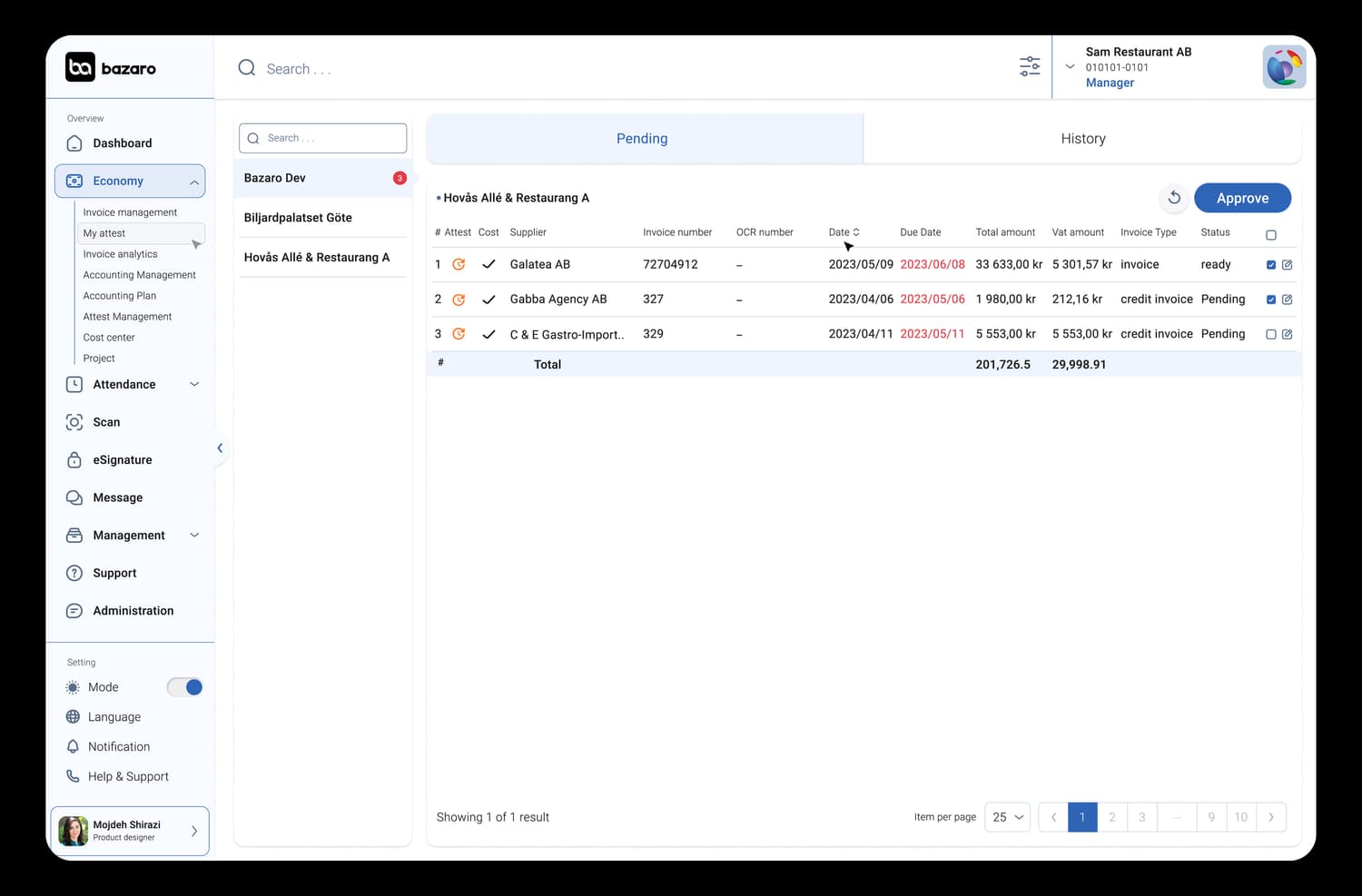
InvoiceIQ addresses all five. It centralises invoice collection, applies consistent coding, identifies VAT correctly, keeps your numbers current, and shows upcoming payment obligations in one dashboard.
If you're still processing invoices manually, the question isn't whether you can afford InvoiceIQ. It's whether you can afford not to.